



Backlinks still shape visibility in Google Search and AI-driven results.
Algorithms changed.
The weighting shifted.
Yet authoritative links continue to signal trust and topical strength.
According to our analysts, sites with strong referring domains outperform peers across both organic listings and AI summaries.
As competition intensifies, many companies consider outsourcing link building to gain scale and expertise.
The real question is simple.
Does outsourcing improve ROI, or introduce unnecessary risk?
This guide examines costs, risks, expected returns, and provides a clear decision framework.
What Is Outsourced Link Building?
Outsourced link building means hiring an external provider to plan and execute backlink acquisition instead of running the process internally.
A third party handles the operational work required to secure placements on relevant websites.
What gets outsourced?
- Prospect research.
- Outreach to publishers.
- Negotiation of terms.
- Content creation when editors require original articles.
- Placement management and follow-ups to confirm links go live and remain active.
What it is not.
It is not buying random links in bulk. It is not automated link schemes powered by software blasts. It is not paying for low-quality directory submissions.
The distinction is simple.
In-house link building stays inside your company. Your team finds prospects, sends emails, builds relationships. They own the process.
Outsourced link building moves that workload outside. A third party handles the outreach, the coordination, sometimes even the game plan.
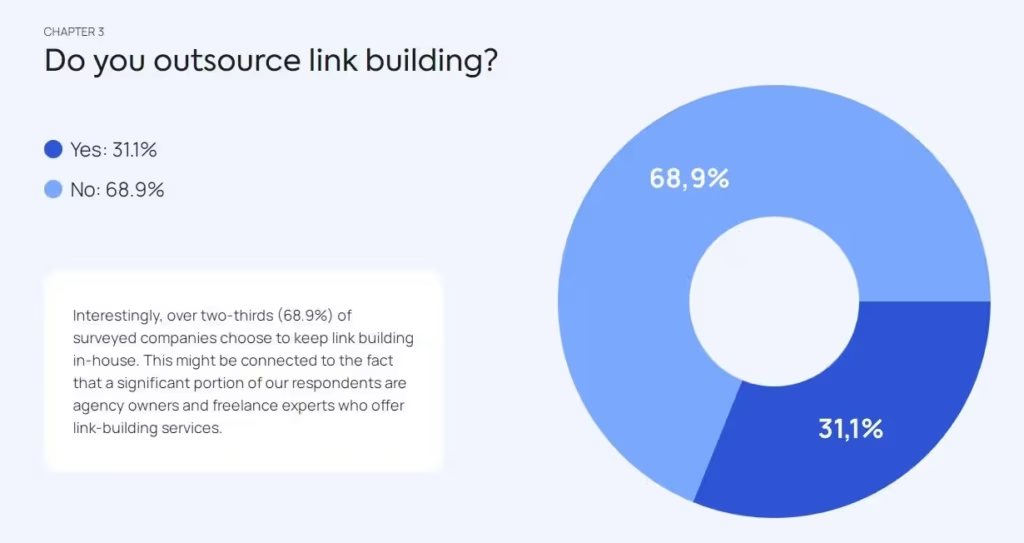
By the way, our survey revealed that only 31.1% of respondents choose to outsource their link building, while a substantial 68.9% prefer to manage it in-house.
Pros of Outsourcing Link Building
1) Outsourcing usually speeds execution.
Agencies already operate prospecting systems, outreach pipelines, editorial calendars. No need to spend three months hiring and training a specialist. Campaigns often start within weeks.
We’ve seen SaaS teams move from zero outreach to 40–50 live backlinks per quarter once execution shifted outside.
2) Scale comes next.
Say rankings stall and the team needs 20 extra referring domains next quarter.
External partners typically expand output faster than an internal hire. Internal teams hit bandwidth walls. Agencies spread workload across account managers, writers, outreach specialists. Work keeps moving.
3) Access plays a role too.
Established providers keep relationships with publishers across niche blogs, media outlets, industry publications.
A fintech startup may struggle to reach finance editors directly. An agency with past placements often opens doors that would take months to build alone.
4) Process discipline matters.
Experienced link building teams track response rates, anchor distribution, link velocity, domain relevance.
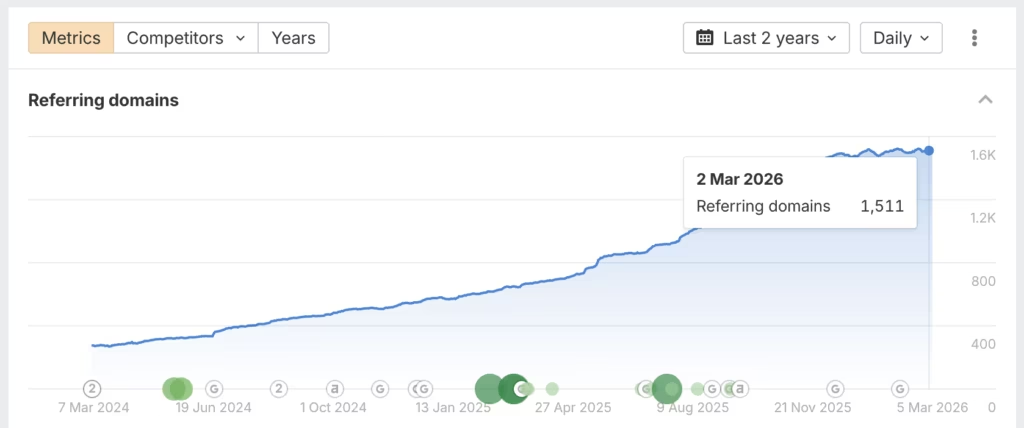
They tweak outreach angles when replies drop.
5) Hiring complexity drops as well.
No recruitment cycle. No payroll weight. No long training ramp. You pay for output, not overhead.
6) Link diversity often improves.
External providers source placements across different industries, formats, content types. The footprint spreads wider. Less concentration risk.
A backlink profile that looks far more natural to search engines.
Cons and Risks of Outsourcing
1) Outsourcing link building reduces direct control.
You don’t see every email sent. You don’t approve every prospect. Messaging may drift off-brand. Small misalignments compound over time.
2) Quality varies.
Some backlink providers chase metrics over relevance. You might receive links from sites with high DR but weak traffic, thin content, or obvious sponsored sections.
3) Anchor over-optimization is another risk.
Agencies sometimes push keyword-rich anchors to show measurable SEO impact. That pattern can trigger algorithmic scrutiny.
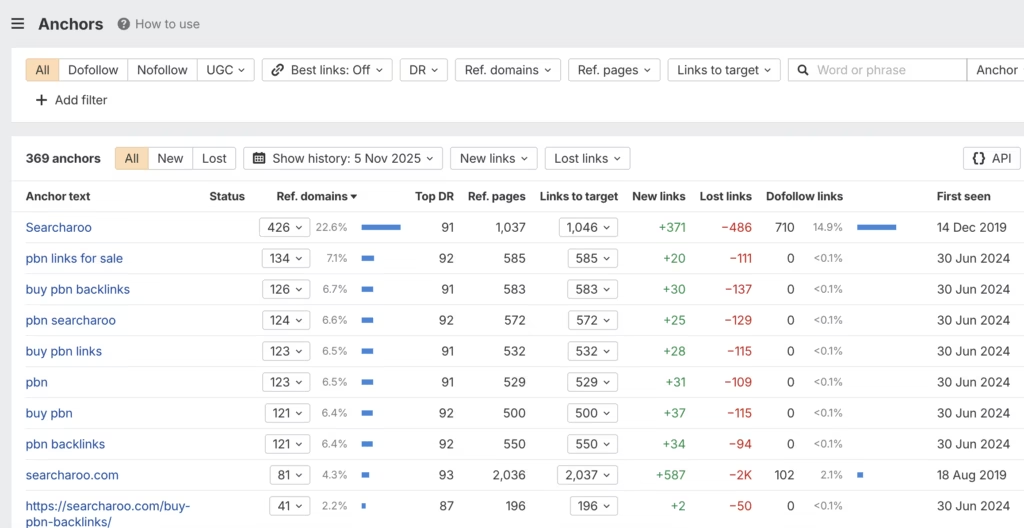
The same applies to unnatural link velocity. A sudden spike of 50 links in one month, after years of minimal growth, looks odd. Google notices patterns.
4) More concerning, some vendors rely on private blog networks or obvious paid placements.
Footprints show up fast. Reused themes, identical author bios, repetitive outbound links. Short-term gains, long-term exposure.
Outsourced link building red flags checklist
- Guaranteed rankings within a fixed timeframe
- Identical pricing for every niche
- No transparency on target sites before placement
- Heavy use of exact-match anchor text
- Sites with high DR but near-zero organic traffic
- Networks of blogs sharing the same design or ownership
If you see two or three of these at once, pause.
In-House vs Freelancers vs Agencies vs Marketplaces
Before breaking down each model, here’s a side-by-side comparison.
| Model | Control | Scalability | Cost Structure | Risk Level | Best for |
| In-House | Full | Limited by headcount | Salary + overhead | Low to moderate | Long-term strategy |
| Freelancers | Moderate | Limited | Per link or retainer | Moderate | Small projects, early-stage |
| Link Building Agencies | High (with oversight) | High | Per link or monthly retainer | Moderate | Focused link acquisition |
| Full-Service SEO Agencies | Moderate | Moderate to high | Broad SEO retainer | Moderate | Companies needing full SEO support |
| Backlink Marketplaces | Low | High | Pay-per-link | Moderate to high | Short-term or supplemental links |
Now let’s break them down.
In-house team
In-house means control. Your team defines qualification criteria, approves targets, shapes outreach messaging, and manages anchor strategy. Nothing moves without internal review.
This works best when SEO drives serious revenue and leadership commits long term. You build knowledge inside the company. Processes improve over time. Relationships compound.
But hiring takes time. Salaries add fixed cost. One or two specialists can only handle so much outreach at once. If growth demands rapid link velocity increases, internal capacity may stall.
Freelancers
Freelancers give flexibility. You avoid payroll commitments and scale up or down with less friction. Many experienced outreach operators work independently and deliver solid placements.
Capacity remains the constraint. One person handles prospecting, outreach, follow-ups, and reporting. Output rarely scales aggressively.
Oversight matters. Some freelancers run clean campaigns. Others rely on recycled site lists or light networks. Results depend heavily on who you hire.
Link building agencies
Boutique agencies focus almost entirely on link acquisition. Their systems revolve around prospect research, editorial communication, and placement tracking.
That specialization usually leads to cleaner execution. Teams monitor anchor distribution, domain relevance, and link velocity more carefully.
Costs sit higher than freelancers but remain tied closely to deliverables. If link building represents a strategic priority, this model offers balance between scale and control.
Full-service SEO Agencies
Full-service agencies bundle link building with technical SEO, content strategy, and on-page optimization. One contract. One reporting structure.
This setup reduces vendor management overhead. Strategy aligns across channels. But links become one part of a larger package.
Depth of specialization may vary. In some cases, companies that want tighter control over link quality choose specialized providers such as Editorial.Link instead of broad SEO retainers.
⚠️ Case in point!
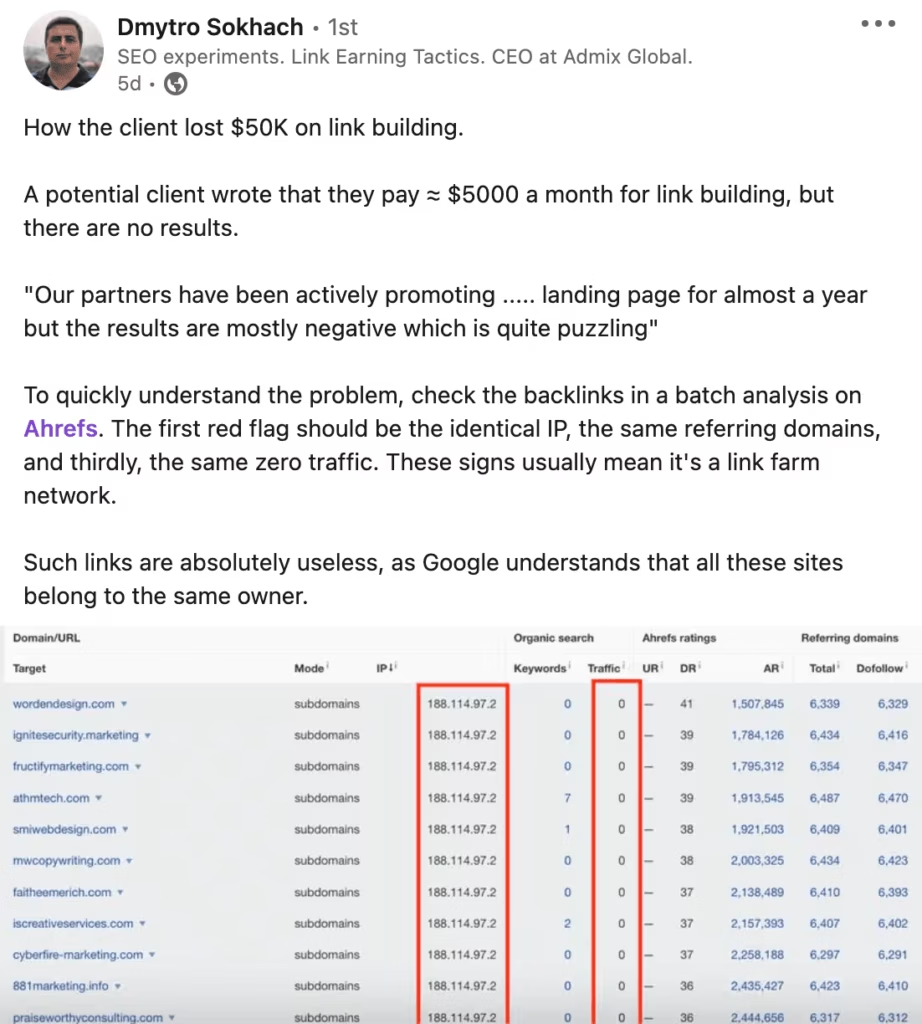
Recently, a potential client reached out to me. They had been working with Agency X, paying $5,000 per month for link building for over a year, yet they hadn't seen any results.
I shared the details of this case in this LinkedIn post to highlight the pitfalls of ineffective link-building strategies.
You typically commit to broader retainers rather than paying strictly per link.
Backlink marketplaces
Link building marketplaces operate transactionally. You select sites, review metrics, and pay per placement. Volume adjusts easily month to month.
Speed attracts buyers. Control does not. Many listings prioritize metrics over relevance. High DR, low traffic sites appear frequently. Sponsored footprints can stack up if you move too fast.
Useful for testing or filling gaps. Risky as a primary strategy.
How Much Does Outsourced Link Building Cost?
Outsourced link building isn’t cheap, and prices vary widely by tactic, niche, and quality level.
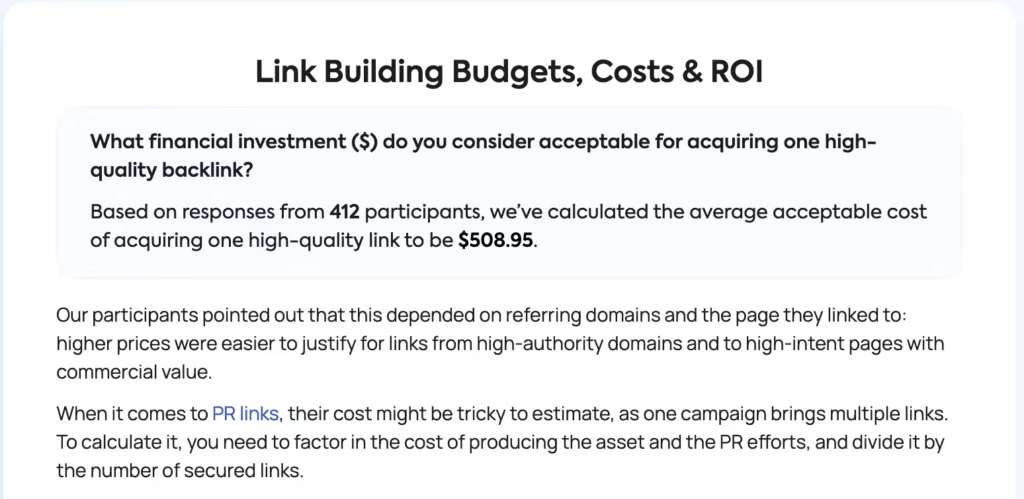
According to a 2025 survey of SEO pros, the “acceptable” cost for one high-quality backlink sits around $508.95 on average, with many marketers predicting prices will rise further.
Highly competitive niches often require bigger budgets simply to compete.
For example, 61% of respondents said iGaming and gambling are among the hardest niches for link building due to fierce competition and limited placement opportunities.
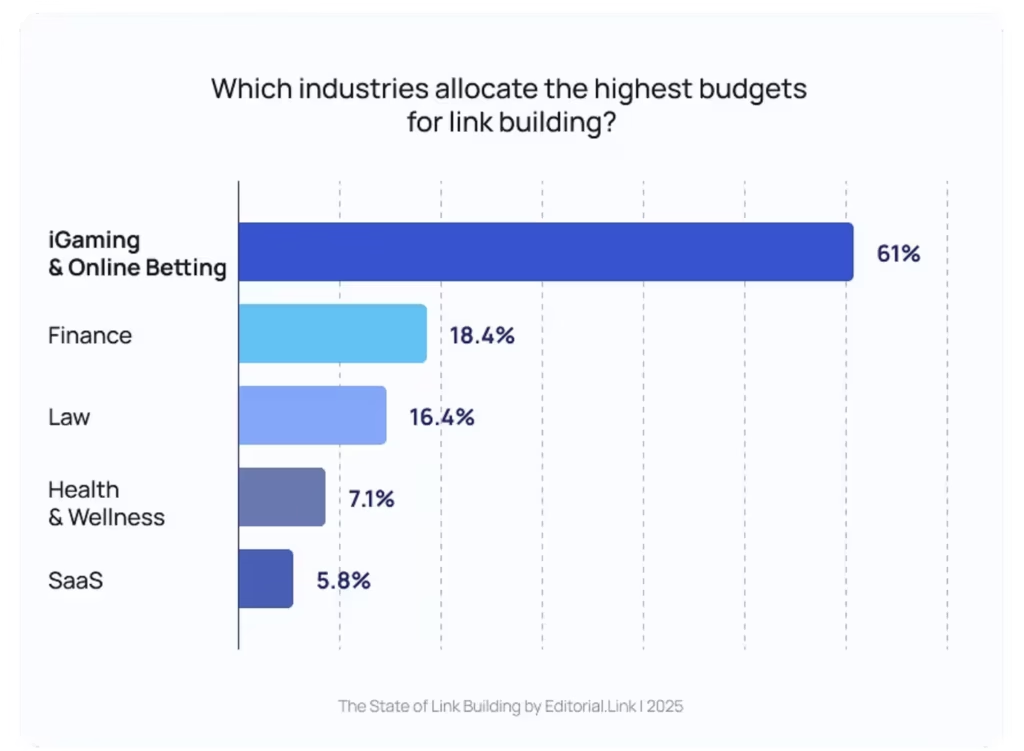
In some cases, companies spend $50k+ on link building just to stay competitive.
Average link building pricing
Industry surveys from Editorial.Link and Buzzstream show the average cost of a quality backlink sits around $500.
Many respondents report paying between $400 and $600 per link for placements on legitimate sites with real traffic.
Guest posts typically range from $250 to $800, depending on authority and niche. Higher-tier editorial sites often charge $800 to $1,5k+.
Digital PR campaigns that secure coverage on major media publications can exceed $1,5k per link, sometimes significantly more.
At the lower end, links under $200 remain common in bulk offers and marketplaces.
Data from BuzzStream indicates these placements frequently come from low-traffic domains or sponsored sections with limited ranking impact.
Monthly campaign pricing
Most structured outsourced backlink campaigns operate on retainers.
- Small campaigns (5–10 links/month): $3k–$6k
- Mid-sized campaigns (10–20 links/month): $7k–$12k
- Competitive verticals or aggressive growth targets: $15k+ per month
Based on our surveys, many SEOs and marketers report monthly link-building budgets in the $3k–$10k range.
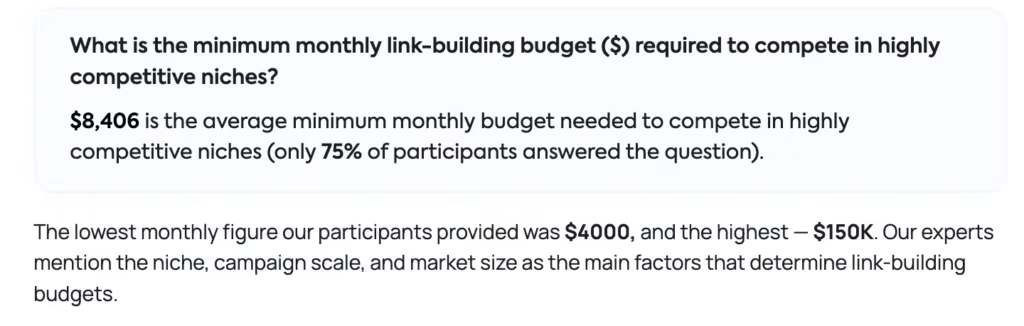
Costs increase with niche competition, authority targets, and content requirements.
Real sites with traffic charge more. Skilled outreach teams cost more. And predictable results rarely come cheap.
How to Choose the Right Link Building Provider for Outsourcing
Here’s a list of my quick tips for outsourcing link building:
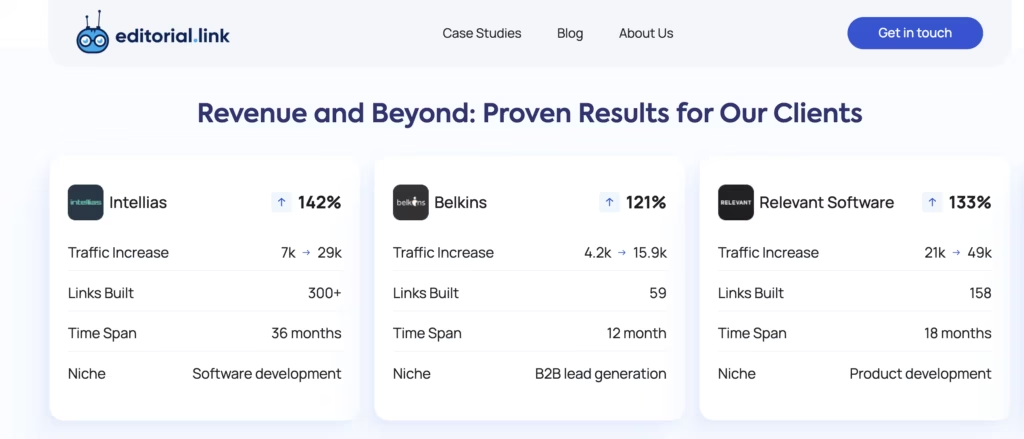
✔️Case Studies: Review the case studies provided by the agency. If they have examples that match your niche, it's a good sign they have the relevant expertise. Use SEO tools like Ahrefs or Semrush to verify the authenticity of these case studies.
✔️Testimonials: Look for reviews on platforms like Clutch, G2 or Reddit. Additionally, you can find the agency's clients on LinkedIn and ask them directly about their experience and results.
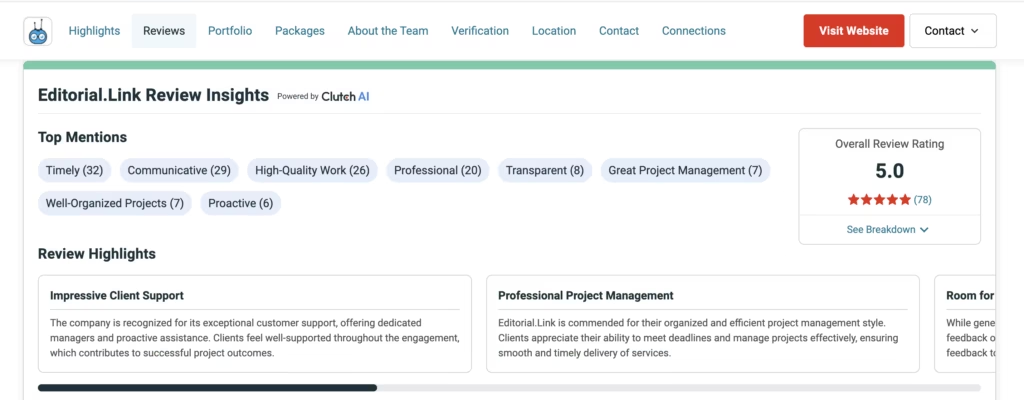
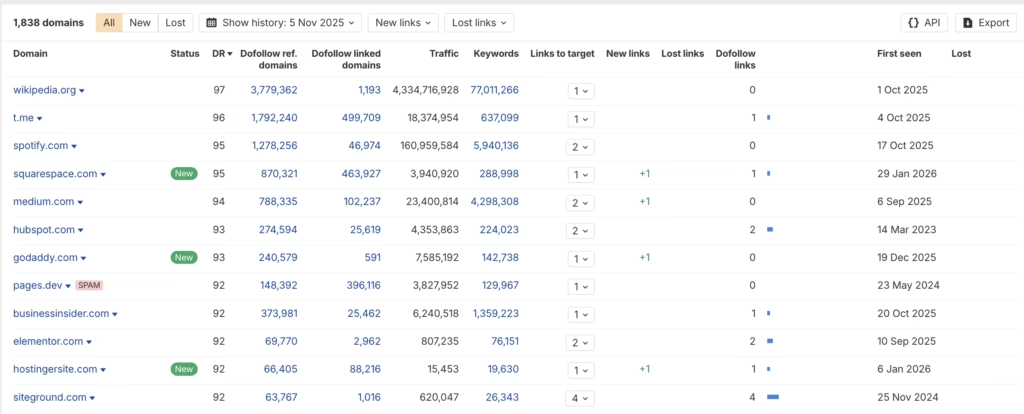
✔️Providers Own Links: Pay attention to the links an agency builds for itself. This isn't always a definitive factor, but it's worth noting.
✔️Target Approval: Do you approve target sites before outreach? You should see domains in advance, not after the link goes live.
✔️What does reporting include? You should see live URLs, traffic estimates, anchor text, and placement type.
✔️What is the average site quality? Ask for real examples. Look at organic traffic, not just DR metrics.
Red flags to watch out for
If a provider hesitates, overpromises, or avoids specifics, slow down.
Most link building problems leave signals early.
Look for patterns like these:
- Guaranteed rankings within fixed timeframes
- Refusal to show sample placements
- Identical pricing across all industries
- Heavy reliance on exact-match anchors
- Sites with high DR and near-zero traffic
When You Should NOT Outsource
Outsourcing link building makes little sense without a content foundation. If your site lacks strong pages worth linking to, external outreach will struggle. Links amplify assets that already exist.
They don’t fix thin content or weak positioning.
It also fails without a defined SEO strategy. If you haven’t identified target keywords, priority pages, or ranking gaps, you’re buying links without direction.
That burns budget fast.
Budget constraints create another problem. Serious link acquisition requires consistent monthly spend. Sporadic campaigns produce uneven link velocity and limited impact.
Early-stage instability matters too.
If product-market fit isn’t clear or your positioning keeps shifting, building authority around unstable messaging creates wasted effort. In those cases, stabilize first.
Then scale.
What Most Companies Ask Before Outsourcing
Before signing a contract, most teams have a short list of hard questions they need answered.
What’s the biggest risk when outsourcing link building?
The biggest risk is losing quality control. Some providers prioritize volume over relevance, placing links on low-traffic sites or private networks that inflate metrics but add little ranking value. Over-optimized anchors and unnatural link spikes increase algorithmic risk. Poor vendor transparency compounds the issue. Weak oversight turns link building into liability, not asset.
How do I verify link quality before a placement goes live?
Request target approval before outreach or payment. Review organic traffic trends, ranking keywords, outbound link patterns, and content relevance. Check whether the site ranks for real queries, not just displays high DR. Scan recent articles for excessive sponsored posts. If traffic is flat or outbound links look transactional, decline placement.
What anchor text strategy is safest for outsourced link building?
A conservative, diversified anchor profile is safest. Most anchors should be branded, URL-based, or natural phrases. Exact-match keywords should remain limited and context-driven. Industry data shows over-optimized anchors correlate with ranking volatility. Let topical relevance and surrounding content carry weight, not aggressive keyword stuffing.
How many links per month should I build if my site is new?
It depens by a niche, but. New sites should move gradually. Five to ten high-quality links per month is often sufficient in early stages. Sudden spikes create unnatural velocity signals. Focus on relevance and consistency over volume.
Do outsourced links help with AI search visibility?
Yes, indirectly. AI-driven results still rely on traditional ranking signals, including authority and topical trust. Strong backlinks improve organic visibility, which influences inclusion in AI-generated summaries. They don’t guarantee placement in AI answers, but higher authority increases the probability of being cited or surfaced in those results.
Conclusion
If you're ready to start, look for potential companies to outsource your link building to.
Contact them to learn how they can help improve your website’s authority, increase traffic, and build your online brand.




![11 Creative Ways To Earn Links [in 2024 & beyond]](https://editorial.link/wp-content/uploads/2024/05/11-creative-ways-to-earn-links.svg)
