


Backlinks remain one of the strongest ranking signals in Google's algorithm.
But not every link boosts rankings, brand authority, or AI search visibility.
Most don't — not significantly, anyway.
The real impact comes from links from authoritative and topically relevant sources. Ones that competitors can't replicate because they're earned, not bought.
After 17 years of building links for tech, finance, real estate and e-commerce brands at Editorial.Link, I've seen the difference firsthand.
This guide explains what makes a premium backlink, how it differs from standard links, how much it costs, how to earn it in 2026, and when the investment makes sense — and when it doesn't.
Key Takeaways
- Premium backlinks are editorial placements from topically relevant, high-authority sites that drive real traffic. They're earned through content, expertise, and relationships — not transactions.
- The average cost of building one quality backlink is $508.95.
- Digital PR, HARO, blogger outreach, and publishing original research are the best tactics to secure premium backlinks.
- Premium links matter most for established, technically sound sites in competitive verticals, especially to promote your money pages.
What Is Premium Link Building?
A premium backlink is a natural, editorial link from a high-quality website that is topically relevant to your page and drives real referral traffic.
These placements typically come from custom content or expert contributions. This makes them difficult for competitors to reverse-engineer.
Premium link building vs standard link building
Standard link building focuses on volume. You analyze a competitor's backlink profile and try to recreate it — directory submissions, generic outreach emails, marketplace purchases. Often link farms or PBNs.
These tactics can produce links, but they don't always move rankings.
Premium link building takes the opposite approach.
Instead of chasing placements on every remotely related webpage, you collaborate with respected industry publications and media outlets and create unique, compelling content that attracts links naturally.
| Standard Link Building | Premium Link Building | |
| Goal | Volume and consistency | Authority and relevance |
| Tactics | Directories, generic guest posts, link exchanges, marketplace purchases | Digital PR, original research, editorial placements, expert commentary |
| Quality Control | Minimal vetting | Strict site filters, editorial standards |
| Risk | High — vulnerable to algorithm updates and penalties | Near zero — aligns with Google guidelines |
| Durability | Fragile — can be wiped by a single update | Durable — editorially earned links survive updates |
What Makes a Backlink Premium?
Not every factor needs to be present. But the more boxes a link checks, the more value it delivers.
Topical relevance
Topical relevance is arguably the strongest quality signal — outweighing raw domain authority.
Backlinks placed within semantically relevant content with descriptive anchor texts help search engines understand your website context and establish you as an authority within your niche. And they get your content in front of people interested in your expertise.

Real organic traffic
Premium backlinks sit in content that attracts real readers — not ghost pages with zero visitors.
I haven't seen any recent data on whether backlinks from high-traffic referring pages have a greater impact on rankings.
But a link from a page with lots of visitors will bring more referral traffic to your website and increase your online visibility.

Strong domain authority (DA, DR, AS)
DA, DR, and AS are useful comparative metrics, but they're not direct Google ranking factors (the 2024 API Leak revealed Google might have its own equivalent, though).
Essentially, the higher the DA/DR/AS, the higher the referring domain authority and the more link juice it passes.
So a link from a relevant DR80 domain will have a higher impact than from a DR20 domain.
AI search citations
Whether the linking page is cited by AI search engines is an increasingly important factor.
If a page mentions you (and links to you) and it gets cited in AI search answers, for example, AI Mode, Perplexity, or ChatGPT, then your brand can surface in the answer as well.
Getting mentioned and cited may not have a direct impact on rankings or traffic, but it increases brand awareness among potential customers and shortens the sales cycle.
How Much Do Premium Backlinks Cost?
Let's get this straight: You can't buy premium backlinks. Not from a marketplace. Not directly from the website. The moment someone starts selling them, they dilute their premium value.
So when we're talking about cost, we're talking about the resources needed to earn them. Think research, content creation, outreach, or relationship building.
What kind of figures are we talking about?
In Editorial.Link's 2026 survey, the average cost based on 412 responses was $508.95, but the spread was quite wide, and many exceeded $1,000.
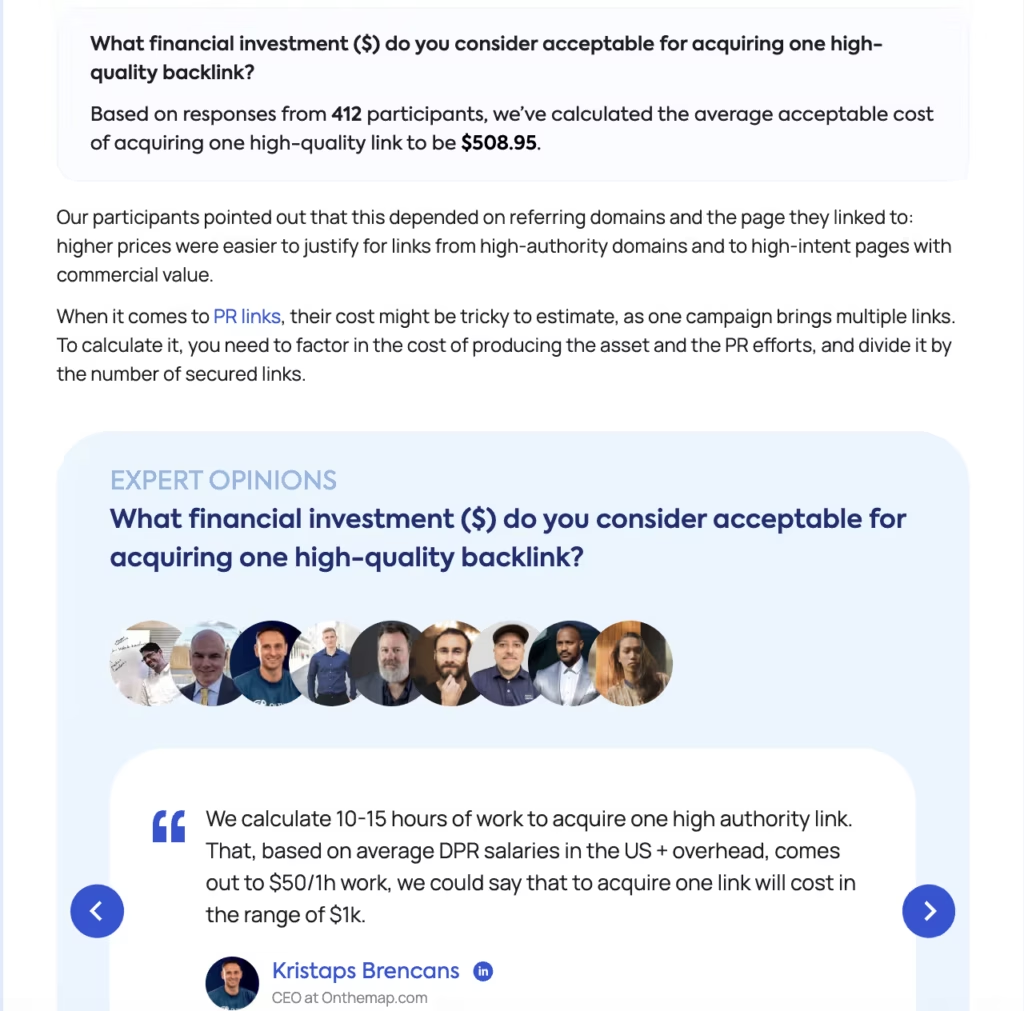
So to earn 10–20 premium backlinks, be prepared to spend roughly $5,000–$10,000.
How to Get Premium Backlinks in 2026
Here are the tactics that, in our experience, give you the biggest chances of securing high-quality backlinks.
Digital PR
Digital PR is the dominant tactic in 2026. In our survey, 48.6% of SEOs rated it as the most effective link-building strategy.
It works like this: you create newsworthy stories or data-driven content and pitch them to journalists.
If the story resonates, they feature it. You get a link from a high-authority domain and get the story in front of thousands of readers.
HARO (Help a Reporter Out)
HARO is a strategy where you pitch your commentary or ideas to journalists looking for insights on a specific topic.

The original HARO platform, later rebranded as Connectively, shut down in December 2024, but there are other specialist platforms, like Featured (which also purchased and resurrected the HARO brand, Qwoted, or MentionMatch (formerly Help a B2B Writer).
Typical success rate is 5–10% per pitch, according to WordStream.
Blogger outreach
This is distinct from digital PR. Instead of targeting journalists and media, you're reaching out to bloggers and podcasters and sharing content that might be of interest to their audiences.
If the story lands, they might link to it from their content or publish it on their website.
This tactic is getting more challenging because bloggers are increasingly aware of the value of their links, so they often request payment. And they get flooded with pitches like yours.
So the trick now is building organic relationships with website owners and bloggers who write for authoritative websites in your niche.

Publishing original research
Publishing original research gives you the edge over your competitors because you get unique data that your competitors can't easily copy. And journalists and publishers love to cite exclusive data.
A case in point: Currently, 519 pages from 279 domains link to our Link Building Statistics report, including Ahrefs, NP Digital, Search Engine Land, and dozens of other high-authority websites.
No money in the world will buy you such links!
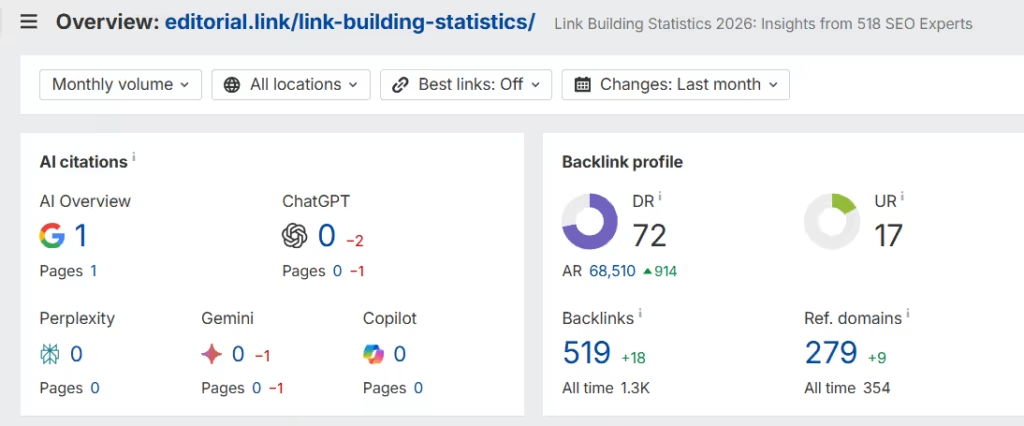
The best part?
It's nearly a year since we published it, and the report is still earning new links for us.
Premium link-building services
A specialised link-building agency can fill that gap when you don’t have the bandwidth for digital PR, outreach, and content creation in-house.
As long as you choose the right one.
Here's what to look for:
- Process transparency
- Emphasis on topical relevance and editorial quality
- Proven track record in your niche
Avoid vendors promising lots of links overnight and not willing to explain how they secure them.
They likely use black-hat tactics. Black-hat and premium don't go together.
When Should a Business Invest in Premium Link Building?
Premium link building is particularly important when:
- You're in a competitive niche: Ranking for competitive keywords in finance, legal, insurance, e-commerce, or SaaS brings substantial financial gains, so high-quality backlinks are worth the investment.
- You're focusing on long-term growth: Premium links are less susceptible to algorithm updates and cement your brand authority. They may take longer to build, but their impact is also longer-lasting.
- Your high-value pages need a boost: When your money pages lag behind competitors, investing in premium links bumps them up in rankings, which translates into more qualified leads for your business.
When Premium Link Building Is NOT Worth It
Not every business needs premium backlinks. Here's when the investment doesn't make sense:
- Local-only businesses. Local citations, Google Business Profile optimisation, and community-level links are more effective. A link from a local publication delivers more clients than a DR 80 national placement.
- Sites with fundamental technical or content problems. Premium links can't compensate for poor architecture, thin content, or a lacking SEO strategy. Fix the foundations first.
- Non-competitive niches. If your competitors have DA 20–30, basic outreach or marketplace links will close the gap at a fraction of the cost.
- You have no time. Link building results take 3–12 months. If leadership expects immediate ROI or your campaign is time-sensitive, it won't work. Prop up your rankings with "quicker" links, for example, from marketplaces. Or consider paid ads instead of SEO.
Final Thoughts
Backlinks still matter. But the bar has risen.
The old playbook — mass outreach, marketplace purchases, PBN links — doesn't cut it anymore. Not in competitive niches where long-term growth matters, anyway. Google's algorithms have made sure of that.
What works in 2026 is simpler but harder: earn editorial placements from relevant, authoritative sites through great content, original data, and real relationships.
If you're ready to build a premium link profile that compounds over time, get in touch with our team.
FAQ About Premium Link Building
Can you build premium backlinks in-house?
Yes, you can build quality links in-house, but it requires dedicated headcount: content creators, outreach specialists, strategists, and ideally someone with digital PR experience.
Plus specialist SEO and outreach software.
Note that a single link-builder can only deliver a handful of premium backlinks. They don't have the bandwidth or necessary networks to do it at scale.
That's why many organizations either outsource link-building completely or use specialist services to supplement their in-house campaigns.
Do nofollow links count as premium?
Nofollow links don't pass full link equity, but they still drive referral traffic, build brand visibility, and contribute to link profile diversity. A nofollow link from a major publication like Forbes still signals authority and brings more people to your website than links from less-known sites.
Also, AI systems don't distinguish between dofollow and nofollow links.
However, for pure ranking impact, though, dofollow editorial links deliver more value.
How do I measure the ROI of premium link-building?
To measure the ROI of premium backlinks, track organic traffic growth, keyword ranking movement, and referral traffic.
For revenue attribution, measure conversions from organic landing pages that received backlinks.
Bear in mind, none of these are perfect methods because they don't account for other optimizations and factors.
For example, your improved rankings may be thanks to better content, and not just the links as well. And it’s difficult to calculate exactly how much you spent on building the links.
That's why many teams look at SEO ROI as a whole and use value/cost estimates rather than fixed values.